
 Save to Pinterest
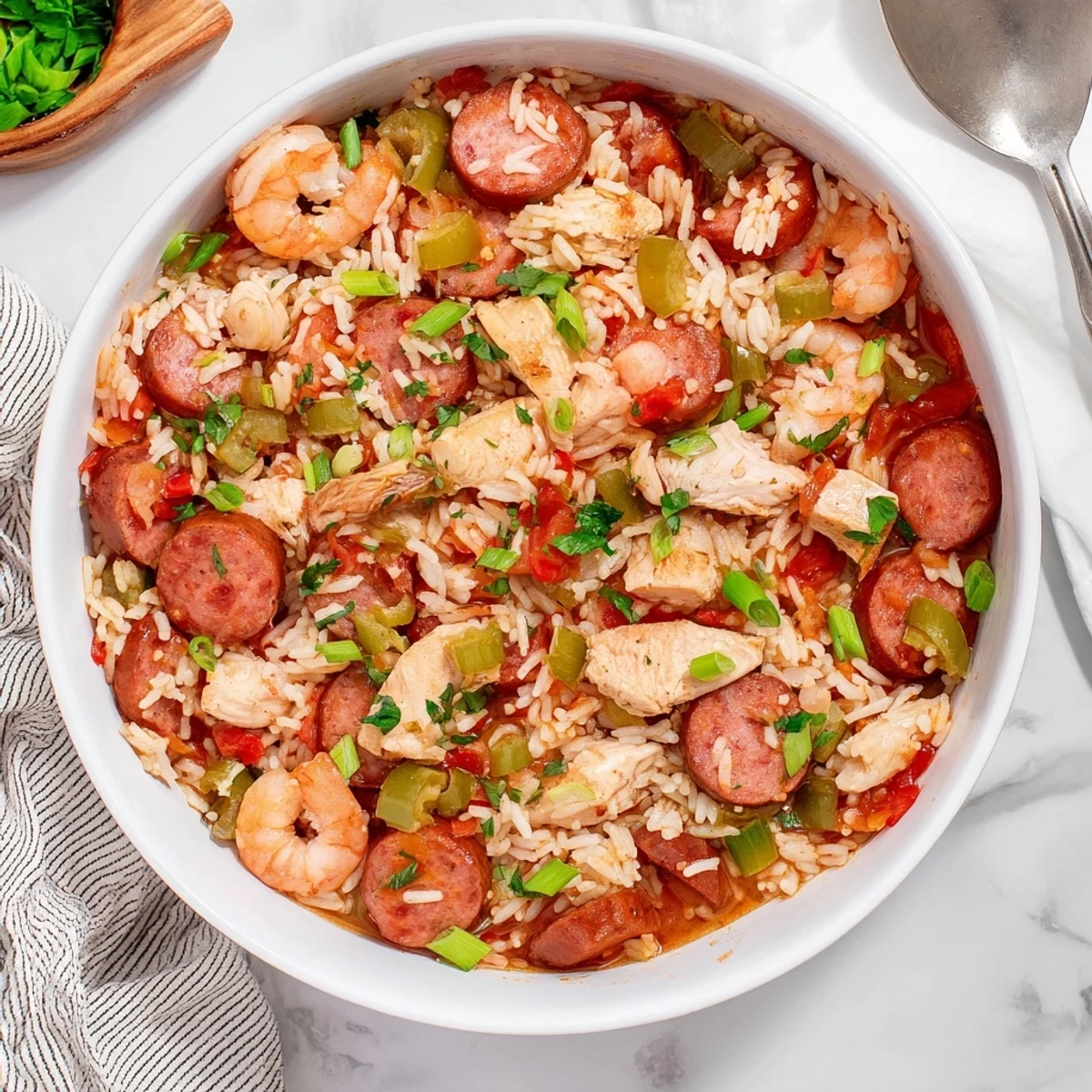
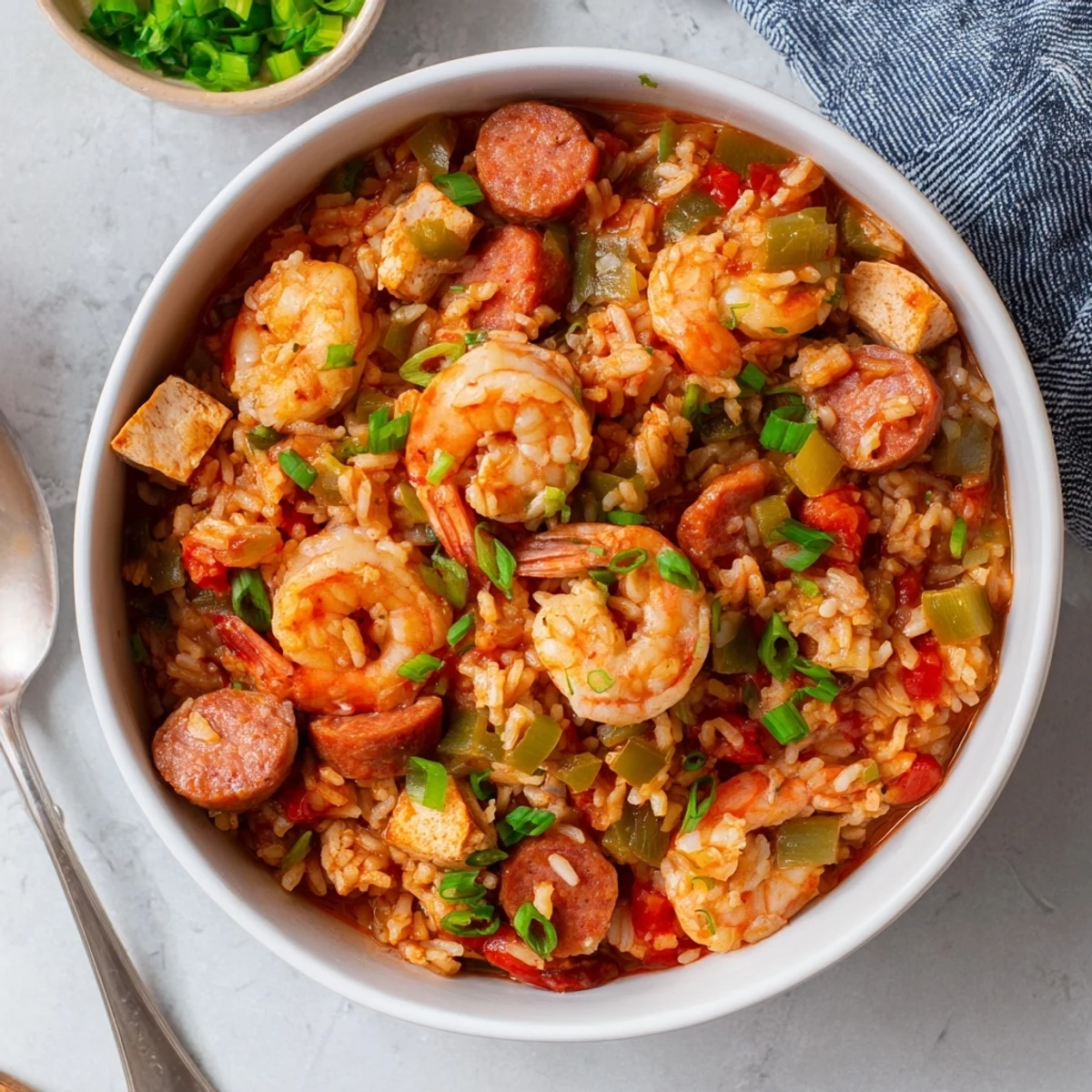
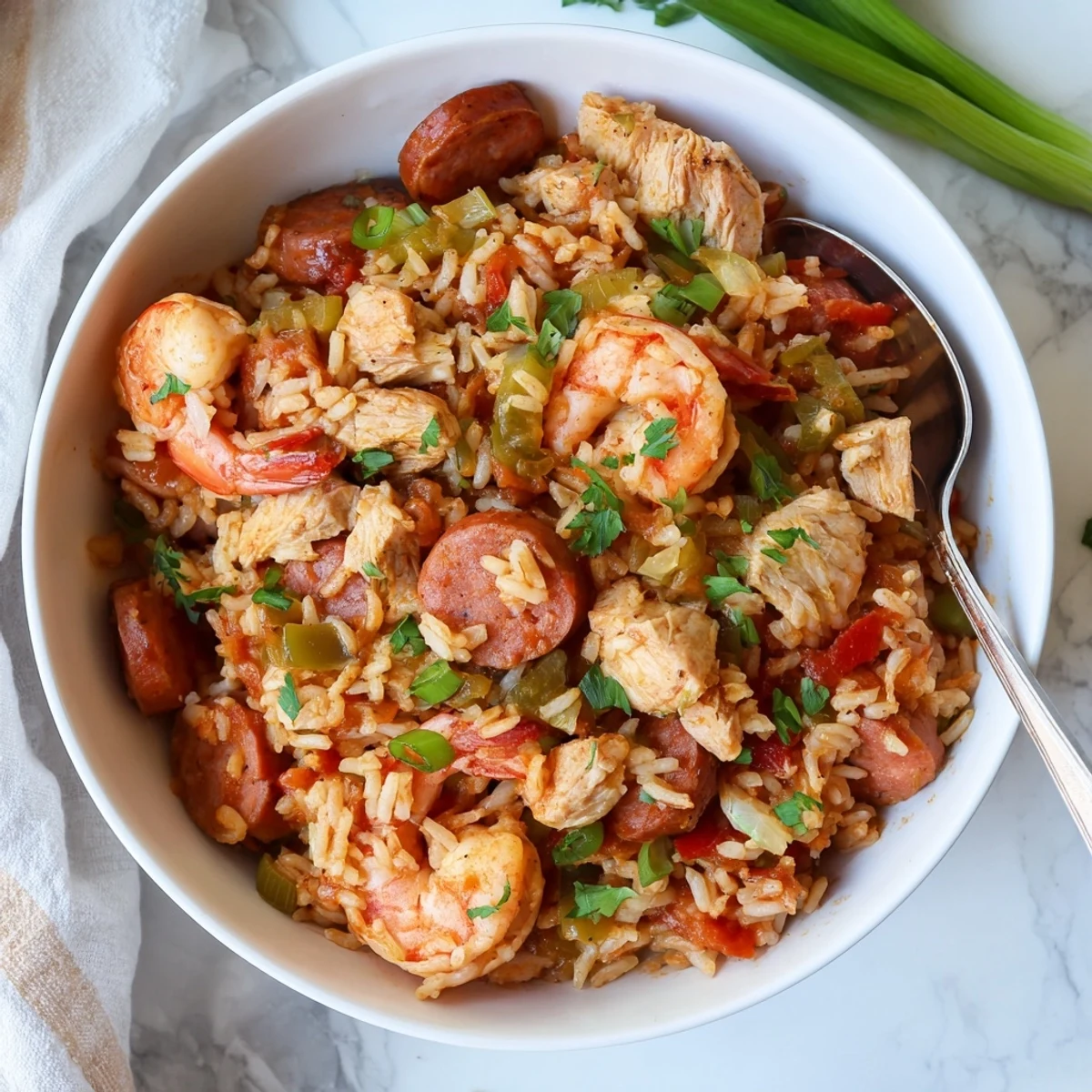
 This classic Cajun dish brings together andouille sausage, tender chicken, and succulent shrimp in one flavorful pot. The holy trinity of onion, bell pepper, and celery creates a rich aromatic base, while Cajun seasoning, smoked paprika, and herbs build layers of spicy depth. Long-grain rice simmers in chicken broth, absorbing all the bold flavors until perfectly tender.
Ready in just one hour, this vibrant Southern staple delivers restaurant-quality results with minimal cleanup. The dish comes together in stages—meats are browned first for depth, vegetables are softened, then everything simmers together. Shrimp added at the end stay plump and juicy while completing the protein trio.
Serve hot with fresh scallions, parsley, and lemon wedges to brighten the rich flavors. Adjust cayenne to your preferred heat level, or add hot sauce for extra kick.
My tiny apartment kitchen became an accidental New Orleans kitchen the night I first attempted jambalaya. The spice hit the air and suddenly my roommates were wandering in, glasses of wine in hand, asking what smelled so incredible. We ended up eating straight from the pot, standing around the stove, while the rain poured down outside. That's the magic of this dish—it pulls people together.
I once made this for a Mardi Gras party and forgot to buy enough rice, so I stretched it with extra vegetables and nobody noticed. The host actually asked for the recipe, which I took as the highest compliment. That's the thing about jambalaya—it's forgiving. It's meant to be made with whatever you have on hand.
Ingredients
- Andouille sausage: This smoked pork sausage is the backbone of authentic flavor and worth seeking out at specialty grocers
- Chicken thighs: Dark meat stays juicy during long cooking and adds richness that breast meat just can't match
- Shrimp: Add them at the very end so they stay tender and don't turn rubbery
- The holy trinity: Onion, bell pepper, and celery are non-negotiable—they create the aromatic foundation
- Long-grain white rice: Rinse it well to remove excess starch, which prevents gumminess
- Cajun seasoning: Store-bought works, but I've started mixing my own to control the salt level
- Smoked paprika: This adds that gorgeous red color and subtle smoky depth
- Bay leaf: Don't forget to fish it out before serving
Instructions
- Sear the meats first:
- Brown the sausage and chicken separately in batches, which builds flavor through the Maillard reaction and prevents overcrowding the pot
- Build the flavor foundation:
- Sauté the vegetables until they're softened and fragrant, then add garlic at the very end so it doesn't burn and turn bitter
- Toast the rice:
- Coat the rice with the spices and tomato juices before adding liquid, which helps each grain stay separate and absorb seasoning
- Simmer gently:
- Keep the heat low and resist the urge to stir too often, which releases excess starch and makes the rice gummy
- Add shrimp at the end:
- Fold them in during the last few minutes so they cook through but remain plump and sweet
 Save to Pinterest
 My friend Sarah still talks about the time I brought jambalaya to her potluck dinner party. She said it was the first time all year her apartment felt like a real home, filled with people laughing and reaching for seconds. Food does that sometimes.
Getting The Rice Right
I've learned that the liquid ratio matters more than almost anything else. Too much broth and you end up with soup, too little and the rice stays crunchy. The 2:1 ratio of liquid to rice never fails me, but I always keep a little extra warm broth nearby just in case.
Building Your Spice Blend
Store-bought Cajun seasoning is perfectly fine, but once you start mixing your own you'll never go back. I keep a jar of my homemade blend with extra paprika and a touch more garlic powder. It's funny how such small adjustments make the whole house smell different.
Make It Your Own
The beauty of jambalaya is how it adapts to whatever's in your kitchen. I've made versions with leftover turkey, swapped in turkey kielbasa, and even doubled the vegetables when meat wasn't in the budget. My grandmother would probably shake her head, but some of those experiments turned out better than the original.
- Add a can of drained kidney beans if you want to stretch it further
- Stir in a handful of chopped greens during the last 5 minutes for color and nutrition
- Always serve it with hot sauce on the side so guests can adjust the heat themselves
 Save to Pinterest
 There's something deeply satisfying about a one-pot meal that tastes like it came from a restaurant kitchen. Grab a fork and pull up a chair.
Frequently asked questions about this recipe
- → What makes Cajun Jambalaya authentic?
-
Authentic Cajun Jambalaya starts with the holy trinity—onion, bell pepper, and celery—sautéed until softened. The dish features andouille sausage for its signature smoky spice, along with chicken and shrimp. Traditional Cajun seasoning, smoked paprika, dried thyme, and oregano create the distinctive flavor profile that sets this Southern classic apart.
- → Can I make Jambalaya less spicy?
-
Absolutely. Start with the minimum amount of cayenne pepper (¼ teaspoon) and adjust the Cajun seasoning if it's particularly spicy. You can always add heat later with hot sauce or extra cayenne. The dish remains flavorful even with reduced spice levels.
- → What rice works best for Jambalaya?
-
Long-grain white rice is ideal—it holds its shape during cooking and absorbs flavors beautifully without becoming mushy. Rinse the rice before adding to remove excess starch. Avoid short-grain or Arborio rice, which will make the texture too creamy.
- → Can I substitute the proteins?
-
Yes. Use smoked sausage if andouille isn't available. Swap shrimp for crawfish or omit for a meat-only version. Leftover cooked chicken or turkey works well—add during the simmering stage instead of browning raw. For lighter options, try turkey sausage and skinless chicken breast.
- → How do I know when the rice is done?
-
The rice should be tender but still have a slight bite to it—similar to al dente pasta. Most liquid should be absorbed, but the texture should remain moist and slightly saucy, not dry. If the rice is still crunchy, add a splash more broth and simmer a few minutes longer.
- → Can I make this ahead of time?
-
Jambalaya actually tastes better the next day as flavors meld. Cook completely, cool, and refrigerate for up to 3 days. Reheat gently on the stovetop, adding a splash of broth if needed. The rice may absorb more liquid overnight, so additional moisture helps restore the texture.