
 Save to Pinterest
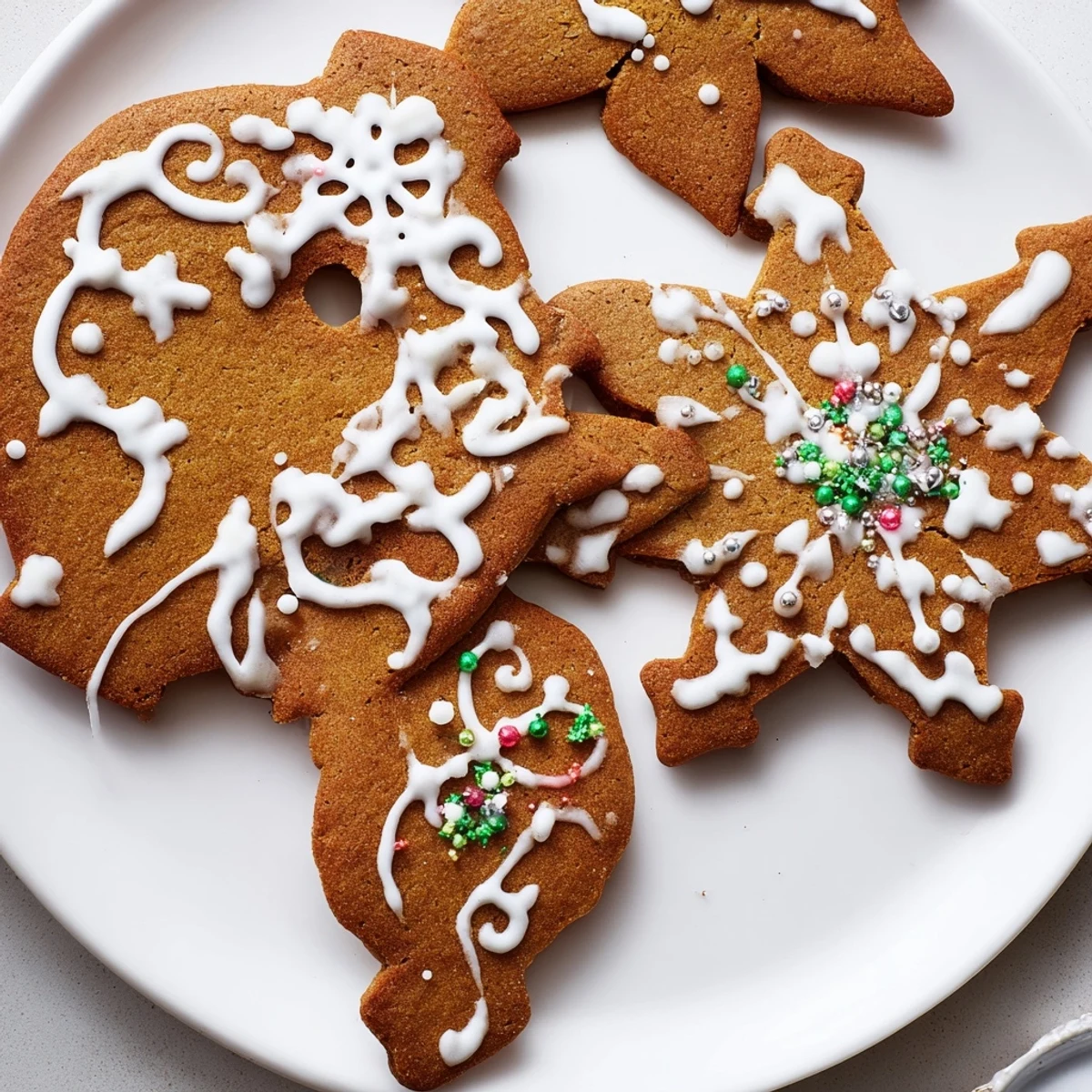
 These ornament gingerbread cookies combine warm spices like ginger, cinnamon, and cloves to create a crisp-edged yet tender treat. The dough is enriched with molasses and brown sugar, chilled for flavor and shape, then rolled and cut with festive cutters. After baking, the cookies are cooled and decorated with royal icing and sprinkles before hanging on holiday trees. This process delivers a flavorful and festive dessert perfect for seasonal celebrations.
I was seventeen when my mom handed me a bag of stale gingerbread cookies from the previous December and asked if I could make them better. That first batch was nothing special—flat, one-note, forgettable—but something about the smell of molasses and cinnamon made me want to try again. Now, every time I pull these ornaments from the oven, I'm not just baking cookies; I'm recreating that moment when I realized homemade could actually taste like the holiday season smells.
I made a double batch one December evening while my sister was in town, and we spent three hours piping royal icing and laughing at how my hand steadiness disappeared around cookie number twenty. She hung hers on her tree two hours away, and I like to imagine them still getting compliments at her holiday parties.
Ingredients
- All-purpose flour (3 cups): The backbone of structure; I've found that spooning it into your measuring cup instead of scooping makes cookies less dense.
- Baking soda and baking powder (3/4 and 1/2 teaspoon): The pair that gives these their tender crumb; too little and they become hard as rocks after a day, too much and they spread everywhere.
- Ground ginger, cinnamon, cloves, nutmeg (1 tablespoon, 1 tablespoon, 1/2, 1/2 teaspoon): These aren't just flavoring; they're what makes your kitchen smell like December, and fresh spices make an obvious difference.
- Salt (1/2 teaspoon): A small amount that somehow makes every spice taste more like itself.
- Unsalted butter (1/2 cup): Room temperature is non-negotiable; cold butter refuses to cream properly with the brown sugar.
- Packed dark brown sugar (1/2 cup): The moisture and molasses undertones in brown sugar work better here than white sugar ever could.
- Egg (1 large): Brings richness and helps bind everything together into a workable dough.
- Unsulphured molasses (2/3 cup): This is the soul of the recipe; the dark, slightly bitter depth that makes people ask what your secret ingredient is.
- Pure vanilla extract (1 teaspoon): A small splash that rounds out the spices instead of competing with them.
- Royal icing, sprinkles, and ribbon: These transform baked cookies into keepsakes, so don't skip them even if you think you might.
Instructions
- Combine your dry ingredients:
- In a medium bowl, whisk together the flour, baking soda, baking powder, ginger, cinnamon, cloves, nutmeg, and salt. This step isn't just mixing; it's aerating the flour and distributing the leavening agents evenly so your cookies bake consistently.
- Cream butter and brown sugar:
- In a large bowl, beat the softened butter and brown sugar together until the mixture looks pale, fluffy, and almost mousse-like. This takes about two minutes with an electric mixer, and it's the foundation that makes these cookies tender.
- Add eggs and molasses:
- Crack in the egg, pour in the molasses, and add vanilla, then mix until everything is fully combined. The mixture will look rich and almost glossy.
- Bring the dough together:
- Gradually add your dry ingredients to the wet mixture, stirring until the dough just comes together. Overmixing here makes cookies tough, so stop as soon as you don't see any streaks of flour.
- Chill your dough:
- Divide the dough in half, shape each half into a disk, wrap tightly in plastic wrap, and refrigerate for at least an hour. This isn't laziness; cold dough spreads less and bakes more evenly, giving you cleaner shapes.
- Preheat and prepare:
- Set your oven to 350°F and line your baking sheets with parchment paper. This prevents sticking and makes cleanup forgettable.
- Roll and cut:
- On a lightly floured surface, roll the dough to a quarter-inch thickness and cut your shapes using festive cutters. The dough should be cold enough to hold its shape but warm enough to cut cleanly.
- Add the hanging holes:
- Use a straw or wooden skewer to poke a small hole near the top of each cookie. Do this while the dough is still on the counter; it's much easier than trying after baking.
- Bake with intention:
- Arrange cookies an inch apart on your prepared sheets and bake for eight to ten minutes. You're looking for edges that feel set and centers that look dry but not browned; they should smell like spiced warmth.
- Cool gently:
- Leave cookies on the baking sheet for five minutes to firm up, then transfer them to a cooling rack. They're still fragile at this point, so be patient and gentle.
- Decorate with joy:
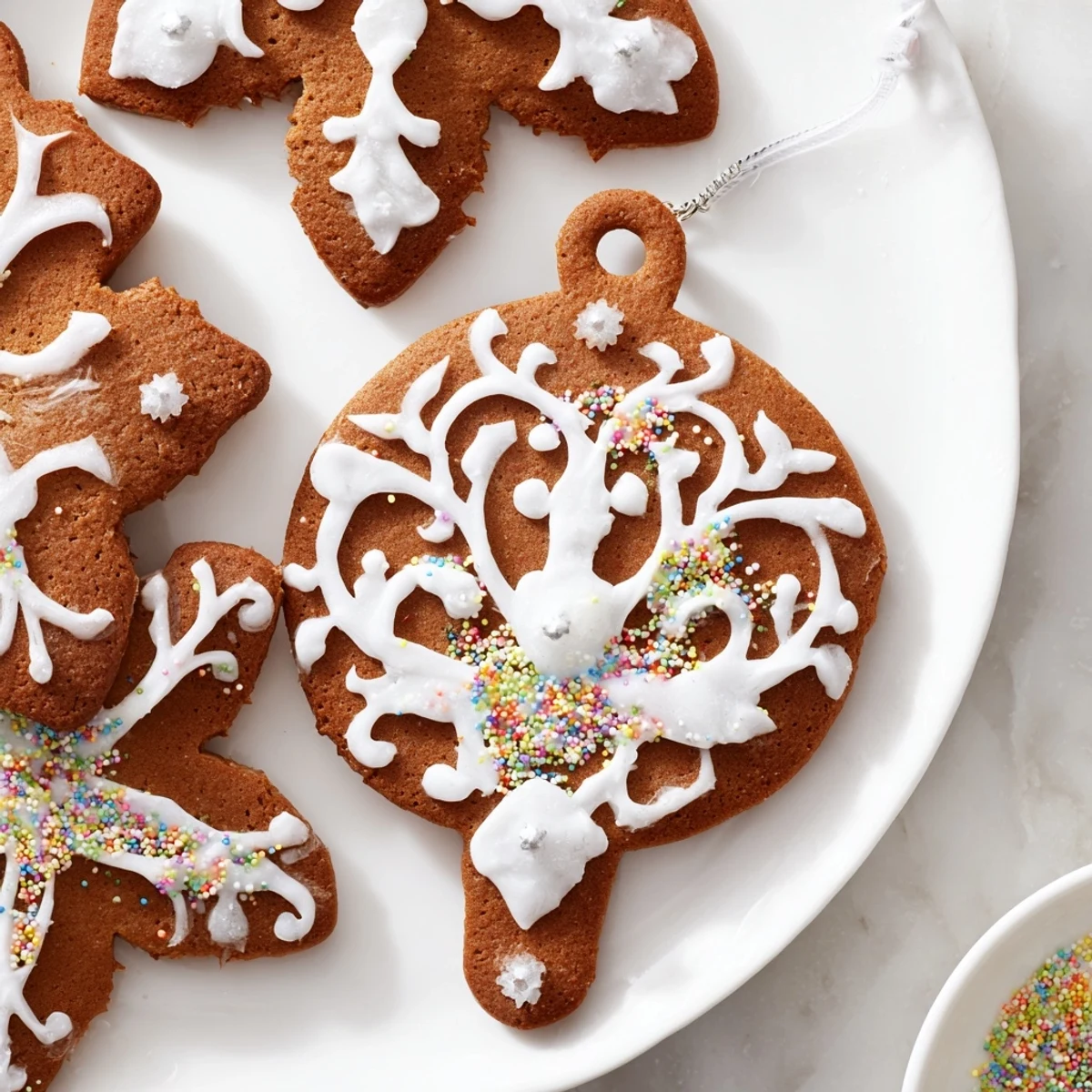
- Once completely cooled, pipe or spread royal icing on each cookie and top with sprinkles or edible glitter. Let the icing set fully before threading ribbon through the holes.
 Save to Pinterest
 My favorite moment with these cookies happened when my neighbor brought over her daughter's ornament from the year before, still hanging on their tree, and asked for the recipe. There's something quietly moving about baked goods that matter enough to keep around.
The Molasses Question
Molasses is the ingredient that separates these cookies from generic gingerbread. It brings a deep, slightly mineral sweetness and a subtle bitterness that makes the spices sing. Dark molasses is richer and more dramatic than light, but either works; just avoid blackstrap, which overpowers everything else with its intensity.
Royal Icing That Actually Works
Real royal icing uses raw egg white, which sets hard and looks professional, but you can use pasteurized egg white powder if you prefer. Whisk two cups of powdered sugar with one egg white and half a teaspoon of lemon juice until the mixture is thick but still pipeable. The lemon juice prevents the icing from tasting purely sweet and adds a subtle brightness that balances the spices.
Storage and Scaling
These cookies keep beautifully in an airtight container for two weeks, which makes them ideal for baking ahead. If you want to double this recipe for a bigger batch, the proportions scale perfectly; just give your mixer a few extra seconds to handle the larger volume.
- Make sure your container is truly airtight; stale gingerbread is disappointing gingerbread.
- If humidity is high where you live, toss a single saltine cracker in the container to absorb excess moisture.
- Decorated cookies can be assembled a few days before you need to hang them, so you can spread the work across an entire weekend.
 Save to Pinterest
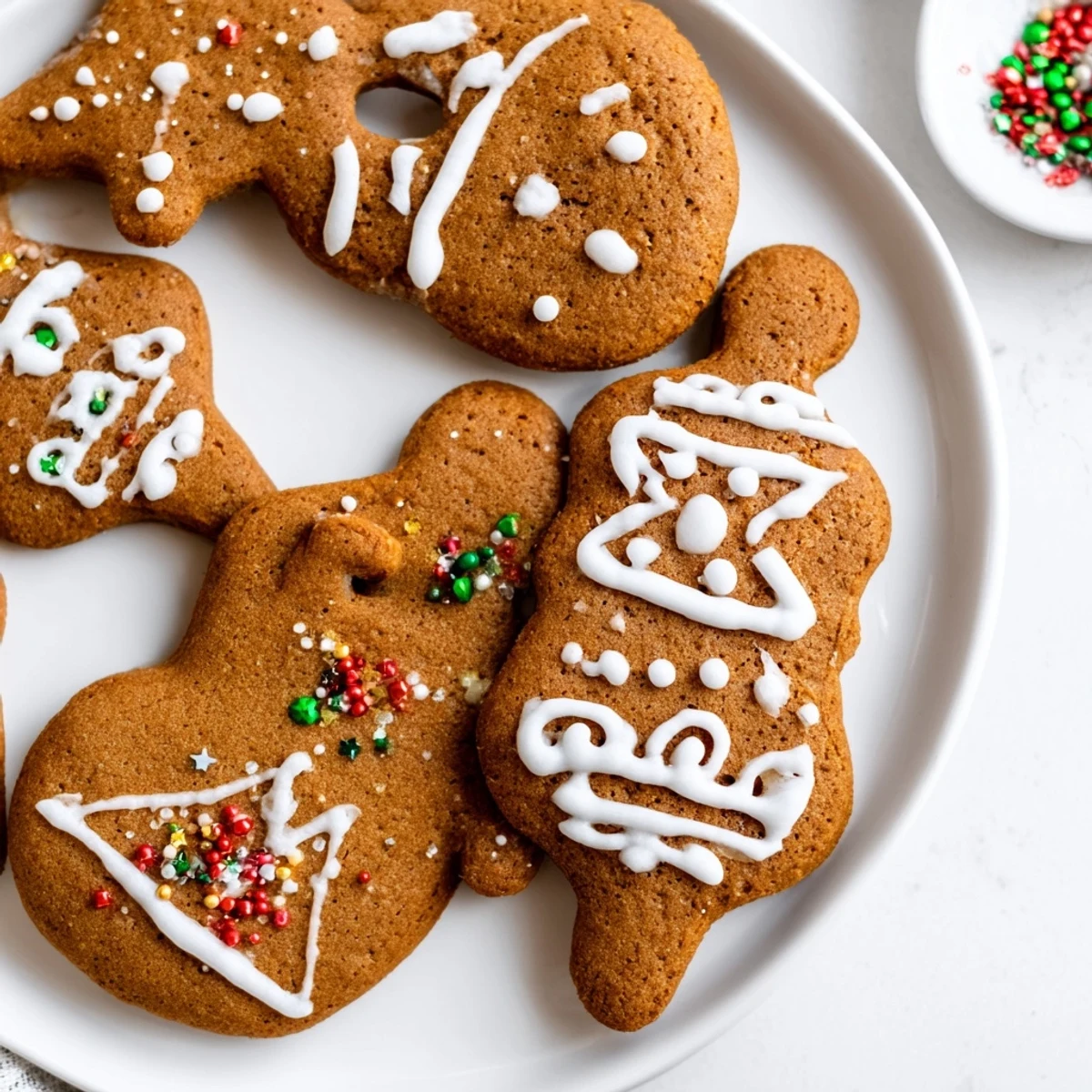
 These ornaments are more than cookies; they're small declarations that you care enough to spend an afternoon in the kitchen making something beautiful. Hang them proud.
Frequently asked questions about this recipe
- → What spices are used in these gingerbread cookies?
-
A blend of ground ginger, cinnamon, cloves, and nutmeg provides the classic warm spice flavor.
- → How can I decorate these cookies for hanging?
-
Use royal icing along with sprinkles, edible glitter, or small candies to add festive touches before threading ribbons through pre-made holes.
- → Can I make these cookies vegetarian or vegan?
-
The original includes eggs and butter, but vegan versions can substitute eggs with flax eggs and butter with margarine.
- → Why is the dough chilled before baking?
-
Chilling helps firm the dough for easier rolling and cutting, and enhances flavor development.
- → What tools are needed for shaping and baking?
-
Essential tools include rolling pins, cookie cutters, baking sheets with parchment, and cooling racks.
- → How long do these cookies stay fresh?
-
Stored airtight, they remain fresh for up to two weeks, making them great for holiday preparations.