
 Save to Pinterest
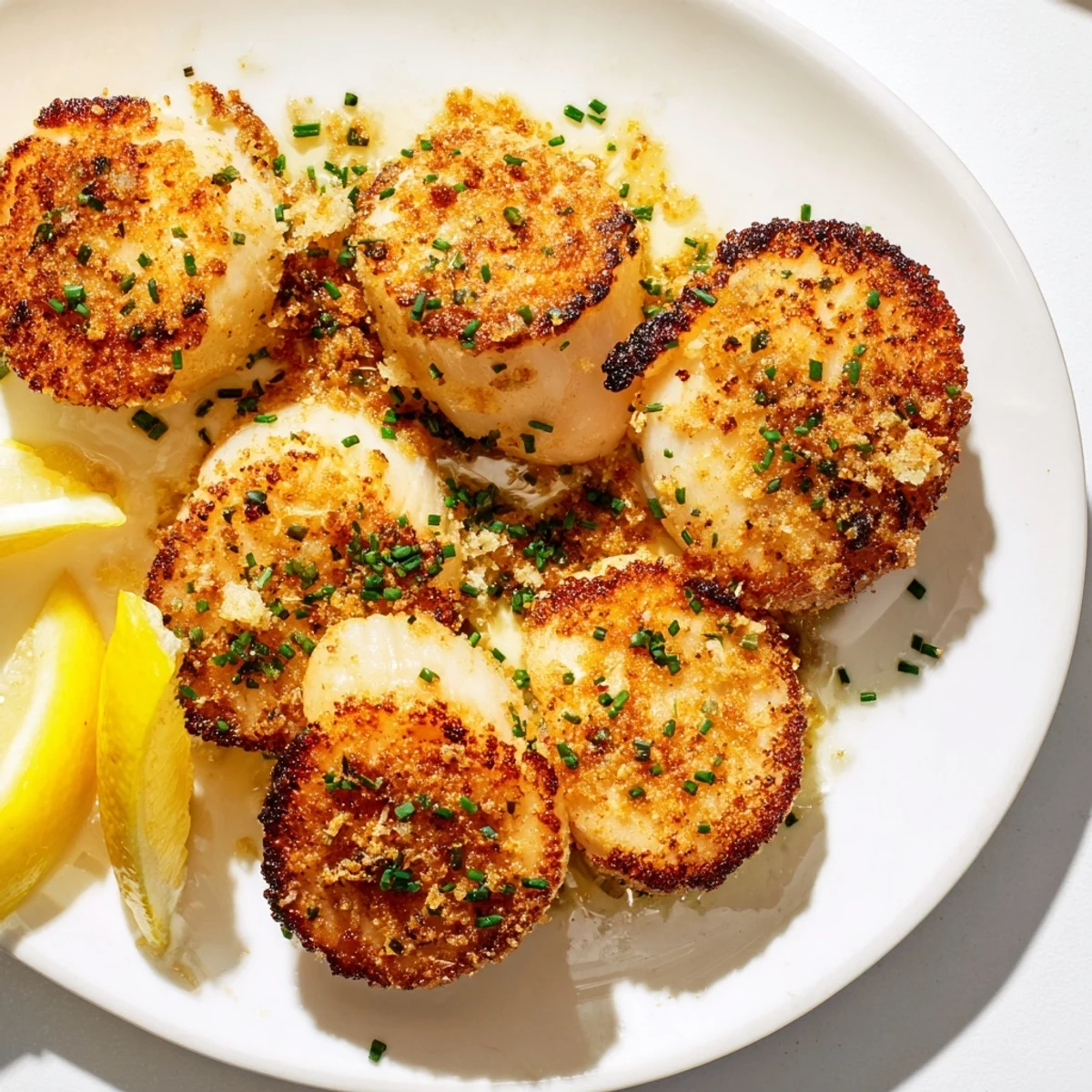
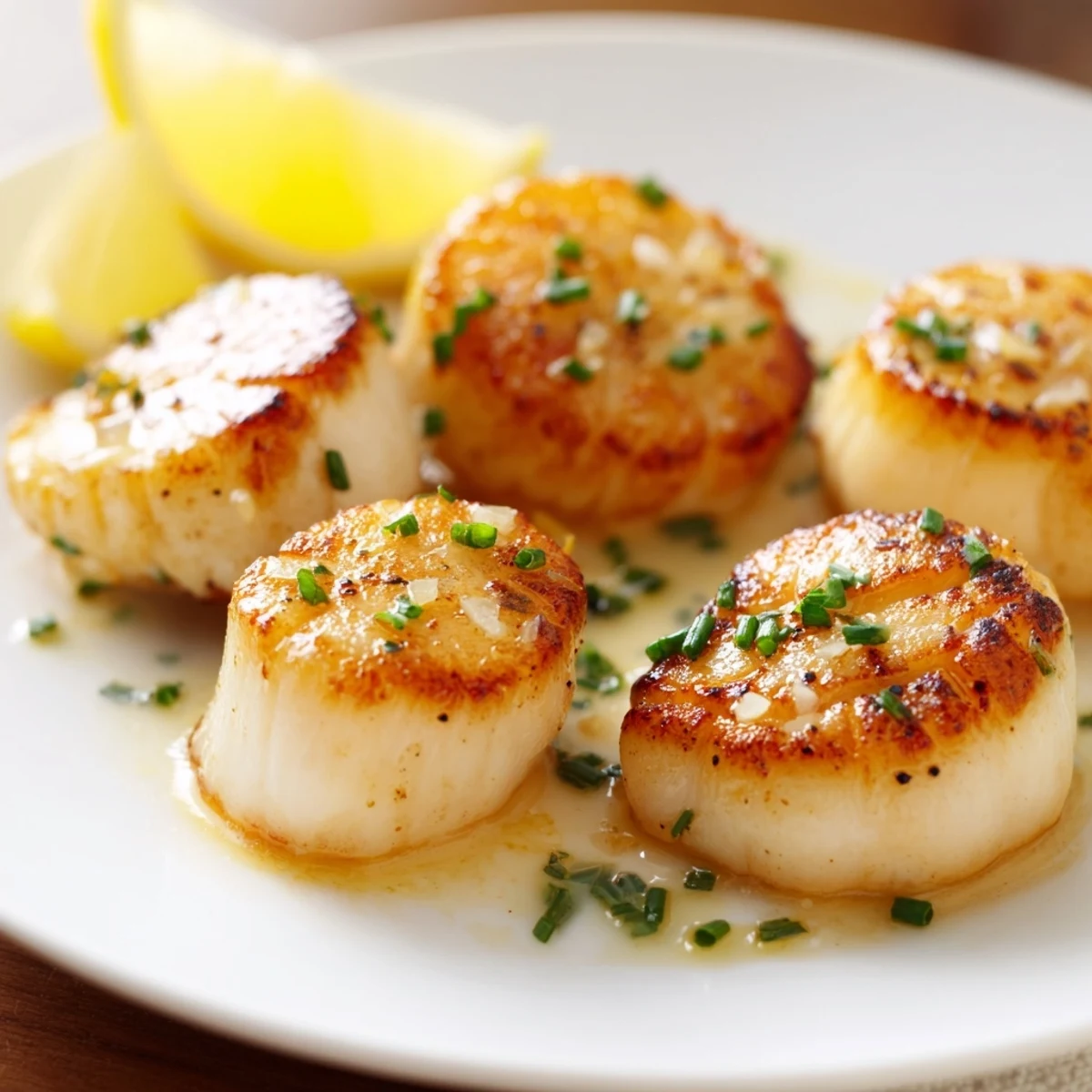
 Seared scallops are quickly cooked in butter and olive oil to achieve a rich golden crust while maintaining a tender, juicy center. Proper preparation involves drying scallops thoroughly and seasoning them lightly with salt and pepper. Cooking over high heat in a skillet ensures a delicate crust forms without overcooking. Serve topped with fresh chives or parsley and a squeeze of lemon for fresh brightness. This dish pairs well with light sides like pea purée or risotto and complements crisp white wines.
I'll never forget the first time I seared scallops at home. I'd had them at a fancy restaurant once, that perfect golden crust giving way to tender, buttery sweetness, and I thought they were impossible to make myself. Then a friend convinced me it wasn't magic—just high heat, patience, and knowing when to stop moving them around. That night, I realized some of the most elegant dishes are actually the simplest, and scallops became my secret weapon for impressing people without spending hours in the kitchen.
I made these for my sister's birthday dinner last spring, served them on a bed of silky pea purée, and watched her close her eyes after the first bite. That's the moment I knew this recipe belonged in my regular rotation—it's the kind of dish that makes people feel celebrated without you having to fuss all day.
- 16 large sea scallops (about 500 g): Look for ones labeled "dry" at the seafood counter—they sear better than wet-packed ones. Pat them thoroughly dry before cooking; this is non-negotiable for that gorgeous crust.
- 1/2 teaspoon kosher salt: The crystals dissolve differently than table salt, giving a cleaner seasoning without any chemical aftertaste.
- 1/4 teaspoon freshly ground black pepper: Grind it fresh if you can—pre-ground loses its aromatics and your scallops deserve better.
- 2 tablespoons unsalted butter: Using unsalted lets you control the salt level perfectly, and you'll taste the sweet, nutty butter flavor as it browns.
- 1 tablespoon olive oil: This raises the smoke point so your butter doesn't burn before the pan gets hot enough for searing.
- 2 tablespoons chopped fresh chives or parsley: The fresh herbs brighten the rich butter and add a hint of color—they're the finishing touch that makes it feel intentional.
- 1 lemon, cut into wedges: A squeeze of acid cuts through the richness and brings out the delicate brininess of the scallops.
- Prep your scallops:
- Remove that little side muscle on the edge of each scallop—it's tough and won't cook the same way. Now here's the crucial part: pat them completely dry with paper towels. I'm talking really dry. The drier they are, the better your crust will be. This is where patience pays off.
- Season simply:
- Sprinkle salt and pepper on both sides of each scallop. Don't be shy—you want an even coating. Let them sit for just a minute while your pan heats.
- Get your pan screaming hot:
- Use cast iron or stainless steel—nonstick won't give you that crust. Add the olive oil and 1 tablespoon of butter over high heat. You're listening for the butter to foam, and then you'll smell it just starting to turn golden. That moment of browning butter is when you know your pan is ready.
- The crucial sear:
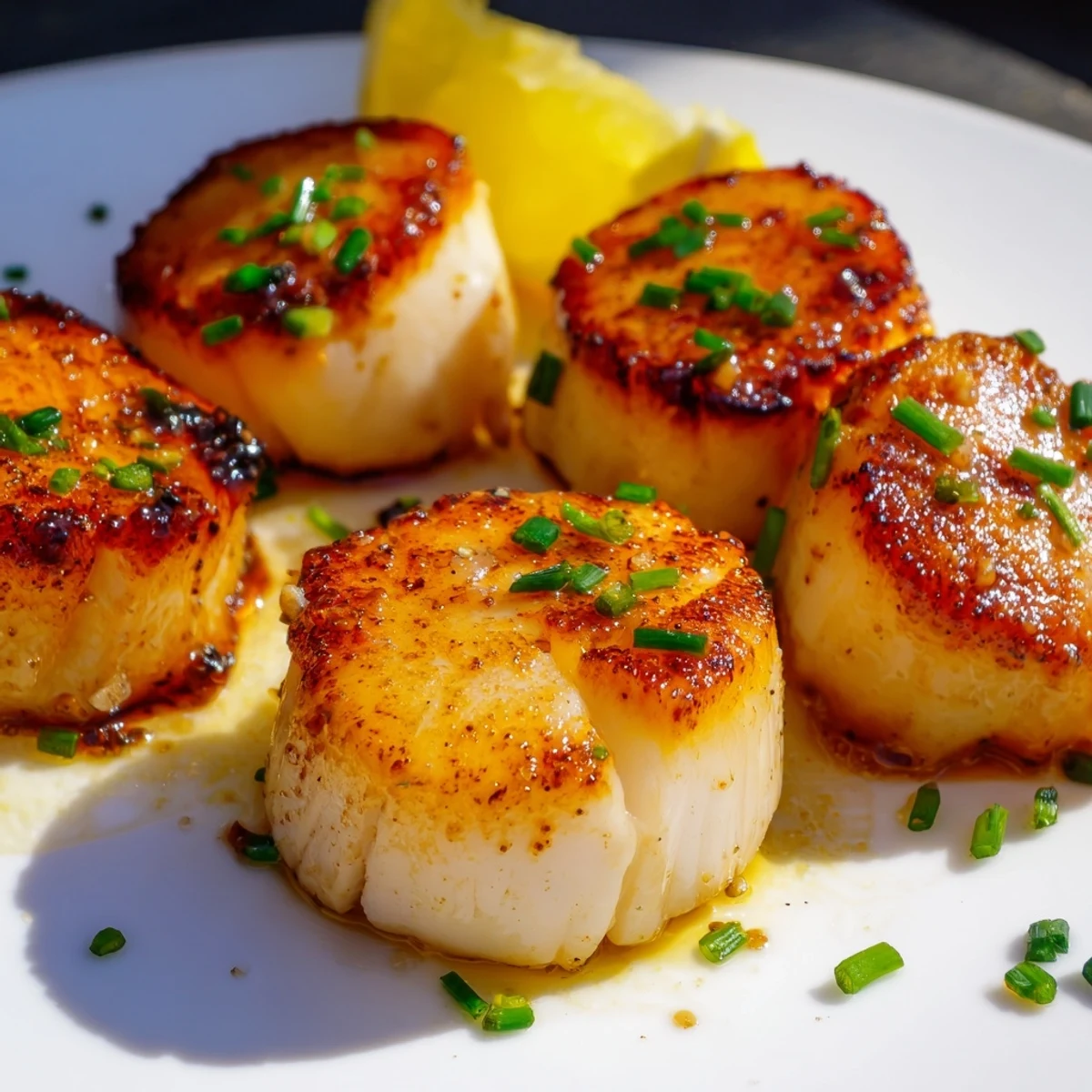
- Place scallops in the pan in a single layer with a little space between each one. This is where you practice the hardest part of this recipe: not touching them. Leave them alone for 1.5 to 2 minutes. Resist the urge to flip them early. You're building that beautiful golden crust, and movement will ruin it. You'll see it starting to turn golden around the edges first.
- Flip and baste:
- Once that first side is a deep golden brown, flip each scallop carefully with tongs. Add the remaining butter to the pan and tilt it so the melted butter pools. Using a spoon, baste each scallop with that foaming butter for 1 to 1.5 minutes. This is the moment the whole dish comes together—the butter flavors everything while keeping the inside tender. Watch for the scallop to turn opaque about halfway through—that's your signal it's almost done.
- Plate and celebrate:
- Transfer them to a plate immediately. They'll keep cooking slightly from residual heat, so don't leave them in the hot pan. Sprinkle with fresh herbs, add a lemon wedge, and taste one to make sure it's perfect. You've just made restaurant-quality food at home.
 Save to Pinterest
 There was an evening when my daughter asked if we could cook something fancy together, and I chose these scallops. Watching her eyes light up as she heard that perfect sizzle, seeing her taste that buttery crust—that's when I understood this recipe is more than dinner. It's a moment of connection, a proof that beautiful things don't need complicated recipes, just good ingredients and a little confidence.
Scallops get an unfair reputation as difficult or expensive, but they're actually one of the most forgiving proteins if you understand what you're doing. The secret is respecting their delicate texture and treating them more like a quick sear than a long braise. Unlike chicken or beef that need resting time, scallops are done the moment they hit the plate. That's not a limitation—it's elegance. The recipe feels fancy because it tastes rich and buttery, but you're using the minimal technique. You're honoring the ingredient rather than overworking it.
These scallops are flexible enough to work as an appetizer for a dinner party or the main course of a light meal. I've served them over pea purée when I want something silky and luxurious, over risotto for earthiness, or just with a simple green salad when I want the scallops to be the star. They're also stunning on a plate with roasted asparagus and a drizzle of brown butter. The beauty is that they cook so fast—while you're making a side dish—that they fit into almost any menu without stress. Wine-wise, a crisp white like Sauvignon Blanc or Chardonnay is perfect, but they're also lovely with a dry rosé or even a light red if that's what you have.
The difference between good scallops and unforgettable scallops often comes down to things you can't see on the plate—the temperature of your pan, the dryness of the scallop, the moment you stop cooking. Every time I make these, I'm reminded that cooking isn't always about complex techniques or unusual ingredients. Sometimes it's about understanding one thing deeply and doing it well. A cast iron or stainless steel pan matters more than you'd think because they hold heat and distribute it evenly. A thin wisp of smoke coming from your oil is the sign you're ready. That golden-brown color on the first side is worth the two minutes of waiting. These small calibrations add up to something that tastes effortless and elegant.
- If you don't have unsalted butter, use salted and reduce the added salt slightly to avoid over-seasoning
- Scallops are best served immediately, so have your plates ready before you start cooking
- Leftovers are best eaten cold the next day—never reheat them, as they'll toughen
 Save to Pinterest
 Every time I make seared scallops, I'm amazed at how something so simple—just four ingredients plus heat and timing—can feel this elegant. That's the gift of this recipe.
Frequently asked questions about this recipe
- → How do I get a perfect crust on scallops?
-
Make sure scallops are very dry before cooking and use a hot skillet with a mix of butter and olive oil. Avoid crowding the pan and don’t move scallops until the crust forms.
- → What is the best fat for searing scallops?
-
Butter combined with olive oil provides flavor and a higher smoke point, ideal for achieving a golden crust without burning.
- → Can I substitute butter when searing?
-
Yes, ghee or clarified butter works well for a nuttier flavor and higher heat tolerance.
- → How do I know when scallops are cooked perfectly?
-
Scallops are done when they are opaque in the center but still juicy, usually after 1.5 to 2 minutes per side.
- → What garnishes complement seared scallops?
-
Fresh herbs like chives or parsley and a squeeze of lemon enhance the buttery richness and add brightness.