
 Save to Pinterest
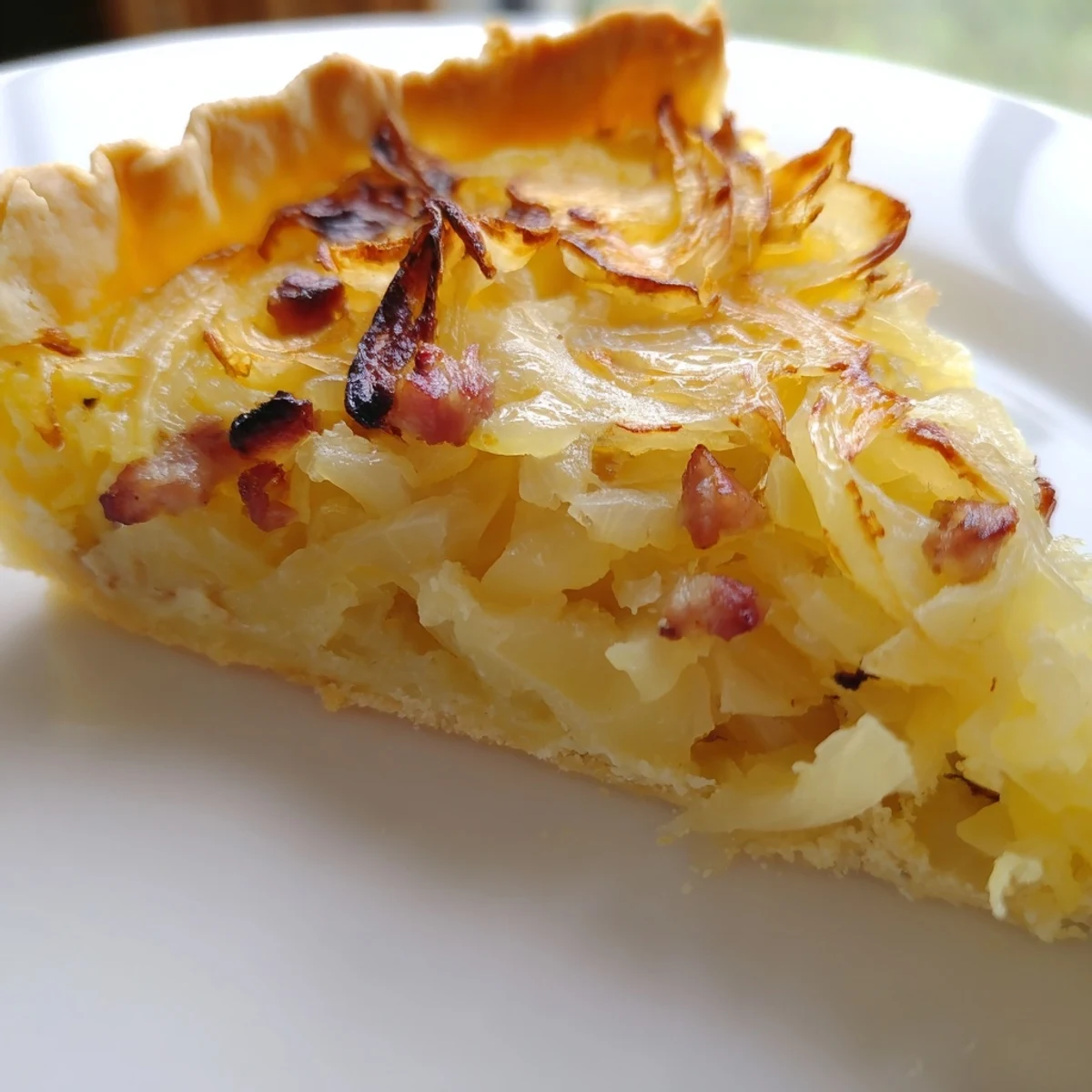
 This traditional German specialty, known as Zwiebelkuchen, combines slow-cooked sweet onions with crispy bacon in a silky cream custard. The golden crust provides a perfect contrast to the tender, savory filling. A beloved dish during autumn harvest season and Oktoberfest festivities, this tart delivers comforting warmth with every slice.
The smell of slowly caramelizing onions takes me back to a tiny apartment in Heidelberg where my landlady first taught me how Zwiefacher Hefeteig differs from quiche dough. I was convinced all savory tarts were the same thing until she handed me a slice still warm from the oven, the custard barely set and the crust impossibly flaky under my fork.
Last October I made three of these tarts back to back because my friends kept showing up with bottles of Riesling and demanding the recipe. The fourth one I wrapped in foil and brought to a potluck where it disappeared before anyone touched the store bought desserts nearby.
Ingredients
- All-purpose flour: The foundation of a crisp, tender crust that holds up to the creamy filling without getting soggy
- Cold unsalted butter: Essential for creating those flaky layers we want in the pastry, so keep it icy cold until you mix it
- Yellow onions: Sweet onions work best here since they caramelize into something almost like savory jam
- Thick-cut bacon: Provides that smoky depth that makes this distinctly German, though smoked tofu creates an excellent vegetarian version
- Caraway seeds: The secret ingredient that makes people ask what exactly they are tasting
- Heavy cream and whole milk: Together they create the perfect custard texture, rich but not heavy
- Emmental or Gruyère cheese: Adds a nutty, melty richness that ties everything together
Instructions
- Make the pastry dough:
- Combine flour and salt in a large bowl, then work in the cold butter with your fingers until the mixture looks like coarse crumbs. Mix in the egg and enough cold water to form a soft, pliable dough, then shape it into a disk and let it rest in the refrigerator for at least 30 minutes.
- Prepare the crust:
- Roll out the chilled dough on a lightly floured surface until it is large enough to fit your tart pan with some overhang. Press the dough gently into the pan, trim the edges neatly, and prick the base all over with a fork before chilling again.
- Caramelize the onions:
- Melt butter in a large skillet over medium heat and cook the bacon until just crisp, then remove it and set aside. Add the sliced onions to the rendered fat and cook them slowly, stirring often, for 15 to 20 minutes until they are golden, soft, and sweet.
- Season the filling:
- Stir the caraway seeds, salt, pepper, and nutmeg into the caramelized onions, then fold in the cooked bacon if you are using it. Remove the pan from the heat and let the mixture cool slightly while you prepare the custard.
- Whisk the custard:
- In a separate bowl, whisk together the heavy cream, whole milk, eggs, and grated cheese until the mixture is smooth and well combined.
- Assemble the tart:
- Spread the seasoned onion mixture evenly over the prepared crust, then carefully pour the custard over the onions so it fills all the gaps.
- Bake to golden perfection:
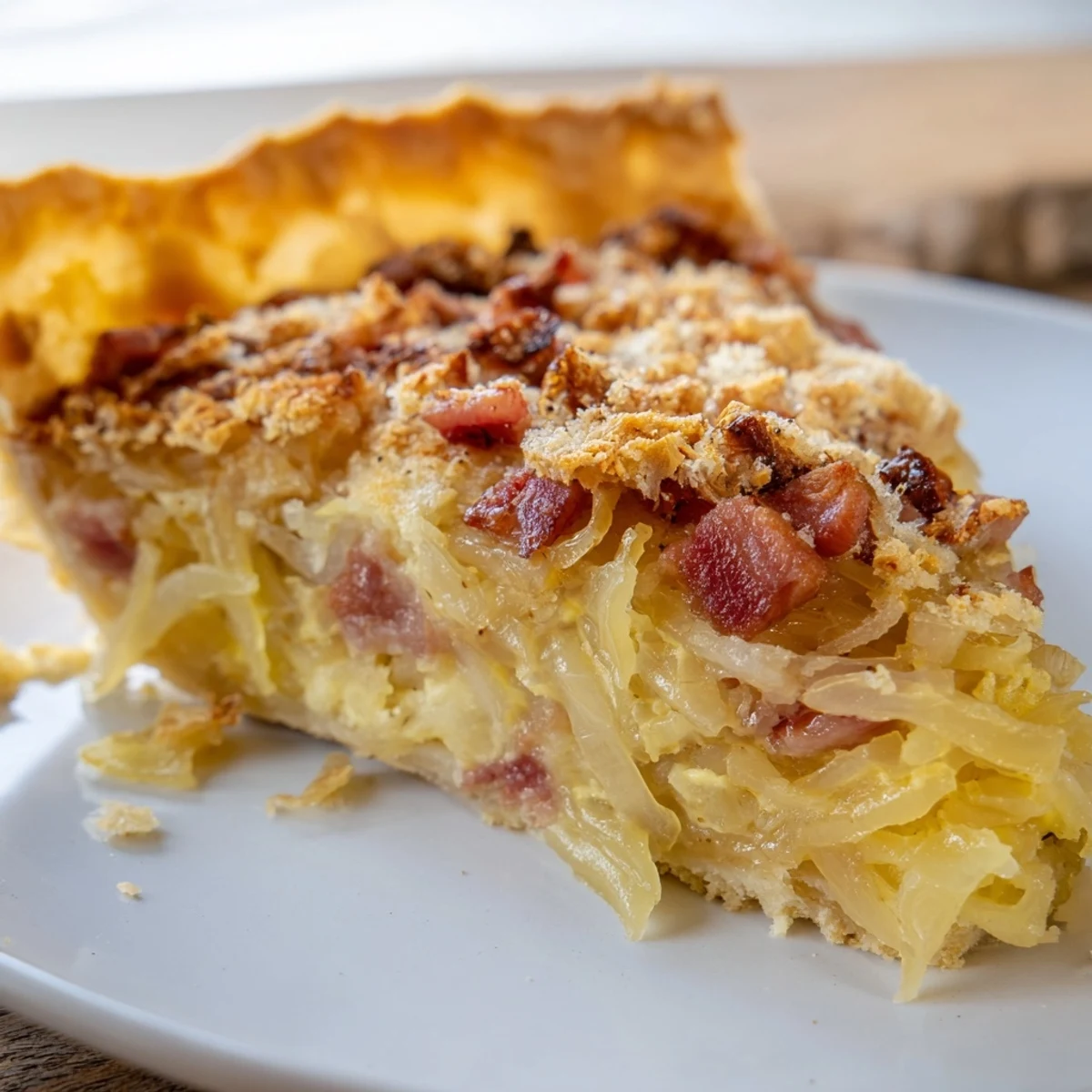
- Bake the tart for 40 to 45 minutes at 375°F until the filling is set and the top is lightly golden. Let it cool for at least 10 minutes before slicing, which helps the custard firm up slightly.
 Save to Pinterest
 This recipe became my go to for rainy Sundays when I want something that makes the whole house smell welcoming. My partner started requesting it on their birthday instead of cake, which says everything about how good it tastes.
Making It Vegetarian
Omit the bacon entirely or replace it with smoked tofu cubes that you fry in butter until crispy. The vegetarian version is just as satisfying, especially if you add an extra handful of cheese.
The Perfect Wine Pairing
A dry German Riesling cuts through the richness beautifully, but a crisp Grüner Veltliner works just as well. If you are hosting an Oktoberfest themed dinner, a cold pilsner will not steer you wrong either.
Serving Suggestions
A simple green salad with a sharp vinaigrette balances the richness perfectly. Traditionalists serve it with a side of sauerkraut for that authentic German experience.
- Slice the tart while it is still slightly warm for the best texture
- The flavor actually improves if it sits for an hour or two before serving
- This travels well if you need to bring it to a gathering
 Save to Pinterest
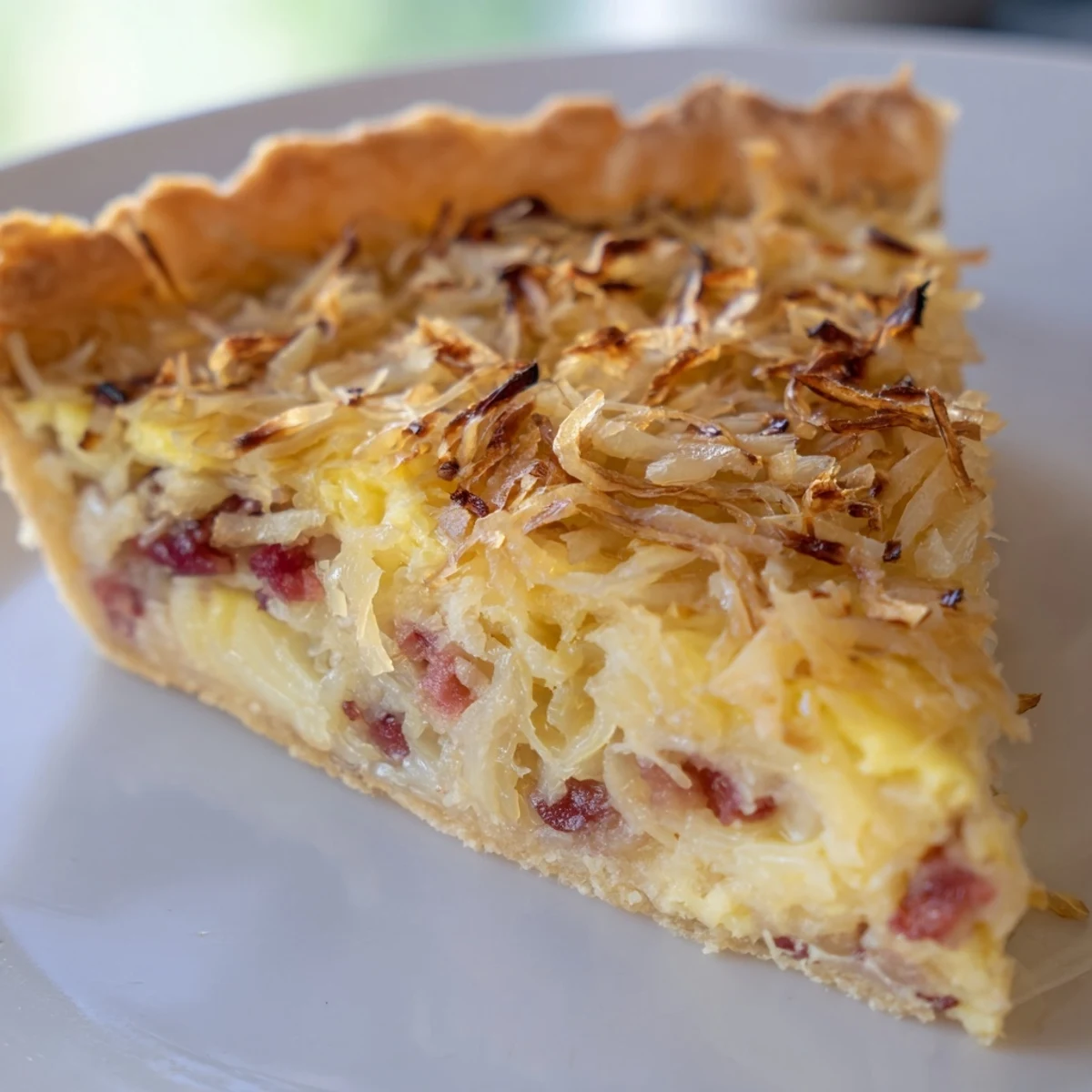
 There is something deeply satisfying about a recipe that transforms humble ingredients into something this elegant. Serve it warm and watch how quickly people ask for seconds.
Frequently asked questions about this recipe
- → What makes German onion pie different from French quiche?
-
German onion pie features a higher ratio of caramelized onions and often includes bacon or speck. The custard is typically richer with heavy cream, and caraway seeds add distinctive earthy notes not found in classic French quiches.
- → Can I make this dish vegetarian?
-
Absolutely. Simply omit the bacon or replace it with smoked tofu cubes for a similar smoky flavor profile. The caramelized onions and creamy custard remain the star, providing plenty of savory depth.
- → How do I know when the custard is properly set?
-
The pie is done when the center no longer jiggles like liquid but has a gentle, custard-like set. The top should be golden brown, and a knife inserted near the center should come out clean.
- → What beverages pair well with this dish?
-
Traditional German white wines like Riesling or Silvaner complement the rich flavors beautifully. For an authentic autumn experience, serve with Federweißer, a young fermented wine. Crisp German pilsners also cut through the creamy richness nicely.
- → Can I prepare German onion pie in advance?
-
The pastry dough can be made up to two days ahead and kept refrigerated. The onions can be caramelized a day in advance. Assemble and bake just before serving for the best texture, though leftovers reheat beautifully at 350°F for 15 minutes.