
 Save to Pinterest
 This hearty vegetable broth brings together a variety of fresh vegetables like onions, carrots, celery, leek, parsnip, potato, mushrooms, and zucchini, simmered gently with bay leaves, thyme, and parsley stems to infuse rich flavors. Prepared with olive oil and seasoned with salt, pepper, and optional soy sauce or vinegar for depth and brightness, it offers a versatile base ideal for sipping or as an addition to other dishes. The process involves sautéing vegetables before simmering in water, resulting in a clear, flavorful broth that’s vegan, gluten-free, and comforting.
I was halfway through a cold when my neighbor knocked with a bag of tired looking carrots and wilted celery. She swore a pot of vegetable broth would fix me, and I trusted her enough to try. The smell that filled my kitchen that afternoon, earthy and warm, convinced me before I even tasted it.
I started making this every Sunday after that, sometimes with friends who would wander in and chop whatever needed chopping. We'd talk while the pot bubbled, and by the time it was done, the broth felt less like a recipe and more like a ritual. It never tastes exactly the same twice, and that's part of why I love it.
Ingredients
- Olive oil: Just enough to coax sweetness from the onions without heaviness, a gentle start to everything that follows.
- Onions: They melt into the background but hold the whole thing together, don't rush them.
- Garlic: Three cloves give a whisper of sharpness that rounds out as it cooks, more would overpower.
- Carrots: Their natural sugar deepens the broth, and slicing them thin helps them release flavor faster.
- Celery: Adds a clean, slightly bitter note that balances the sweetness, use the leaves too if you have them.
- Leek: Milder than onions, it brings a silky sweetness, just rinse it well between the layers.
- Parsnip: A subtle earthiness that I didn't expect to love, but now I never skip it.
- Potato: It makes the broth feel more substantial and adds a quiet creaminess even when strained.
- Mushrooms: They give the broth a savory depth, almost meaty, that makes it feel like more than just vegetables.
- Zucchini: Mild and forgiving, it softens into the background while adding body.
- Bay leaves: Their fragrance is half the reason the kitchen smells so good, don't forget to fish them out.
- Thyme: Fresh is best, it releases a gentle herbal warmth that dried thyme can't quite match.
- Parsley stems: I used to toss them until I learned they carry more flavor than the leaves, save the leaves for the end.
- Salt and pepper: Start with less, you can always add more once it's simmered and the flavors have concentrated.
- Water: The humble base that lets every vegetable speak, no need for anything fancy.
- Soy sauce or tamari: A few drops at the end add a richness that surprises people, they never guess what it is.
- Apple cider vinegar or lemon juice: A small splash wakes everything up, brightens the finish without tasting sour.
Instructions
- Start with the aromatics:
- Warm the olive oil over medium heat until it shimmers, then add the onions and garlic. Stir them gently until they soften and smell sweet, about three or four minutes.
- Build the vegetable base:
- Toss in the carrots, celery, leek, parsnip, potato, and mushrooms. Let them cook together for five to seven minutes, stirring now and then so nothing sticks.
- Add the herbs and zucchini:
- Stir in the zucchini, bay leaves, thyme, parsley stems, salt, and pepper. The kitchen will start to smell like something worth waiting for.
- Simmer low and slow:
- Pour in the water and bring it all to a boil, then turn the heat down to a gentle simmer. Let it go uncovered for thirty-five to forty minutes, the longer it goes, the deeper it gets.
- Strain and season:
- Pull out the bay leaves, thyme sprigs, and parsley stems. Taste it, adjust the salt, and stir in soy sauce or vinegar if you want more complexity.
- Serve your way:
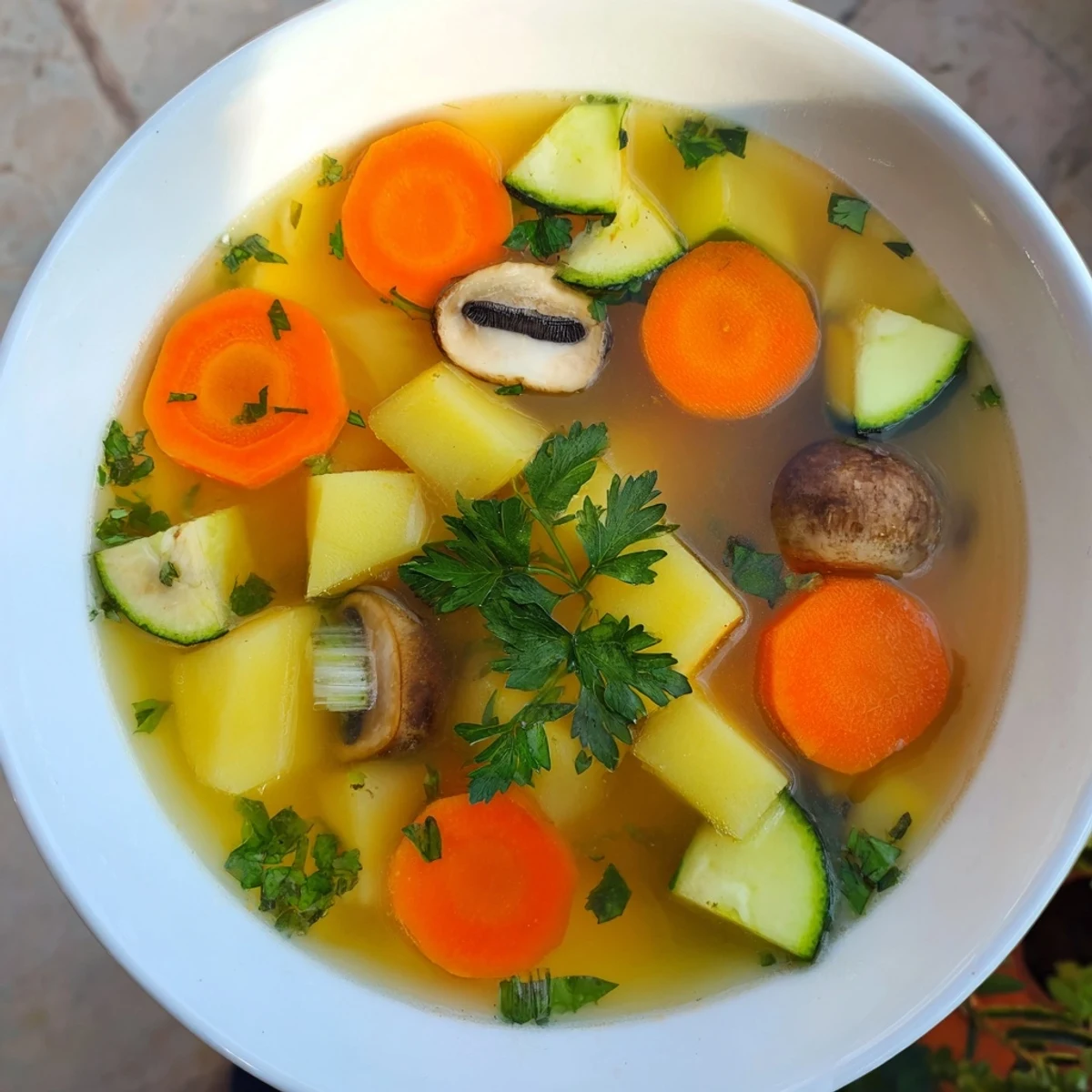
- Strain it through a fine mesh for a clear broth, or leave the vegetables in for a chunky, hearty bowl. Garnish with fresh parsley leaves if you have them.
 Save to Pinterest
 I remember ladling this into mismatched mugs one winter evening when the power went out. We sat by candlelight, holding the warm mugs in both hands, and it felt less like dinner and more like being held. That's when I realized this broth wasn't just food, it was comfort you could pour.
How to Store and Use Leftovers
I keep jars of this in the fridge and reach for them all week, it stays fresh for up to five days. Frozen in portions, it lasts three months and thaws quickly when you need it. Use it as a base for risotto, a head start on stew, or just heat it up and sip it when you need something gentle.
Ways to Make It Your Own
I've thrown in tomatoes, fennel, even sweet potato, and it always works. Sometimes I add a parmesan rind while it simmers for a deeper, almost nutty flavor. The recipe is forgiving, it bends to whatever you have on hand without complaint.
What to Serve Alongside
A thick slice of toasted sourdough with olive oil is all it really needs. If I'm hungry, I'll toss in cooked grains like farro or quinoa to make it more filling. Sometimes I float a few croutons on top and call it dinner.
- Serve it in wide bowls so you can smell the herbs as you eat.
- A drizzle of good olive oil on top adds richness without heaviness.
- Fresh lemon wedges on the side let everyone brighten their own bowl.
 Save to Pinterest
 This broth has pulled me through rough weeks and cold nights, and I hope it does the same for you. There's something quietly powerful about a pot of vegetables turned into warmth.
Frequently asked questions about this recipe
- → What vegetables are best for a flavorful broth?
-
Onions, carrots, celery, leek, parsnip, potato, mushrooms, and zucchini combine well to create a rich and balanced vegetable broth.
- → How long should the vegetables simmer?
-
Simmering the vegetables for 35–40 minutes allows the flavors to fully develop and infuse into the broth.
- → Can I add herbs for more aroma?
-
Yes, bay leaves, fresh thyme, and parsley stems enhance the broth’s aroma and depth without overpowering its natural taste.
- → How can I adjust the broth’s flavor?
-
Stirring in a teaspoon of soy sauce or apple cider vinegar after cooking adds umami or brightness, balancing the flavors nicely.
- → Is this broth suitable for various dietary needs?
-
Absolutely, it's vegan, gluten-free, and free from major allergens unless soy sauce is used. Tamari is a gluten-free alternative.